
Amazon, eBay and Pinterest layoffs change hiring — practical tips for job seekers to pivot, upskill and land roles faster.
Introduction
Early 2026 has brought unsettling news for the job market. According to Business Insider, layoffs have swept across more than a dozen major companies — including Amazon, eBay, and Pinterest — as artificial intelligence adoption and economic headwinds reshape entire industries. The headlines highlight the scale, but the real story lies underneath: the mechanics of hiring, evaluation, and skill requirements are changing rapidly, affecting not just those laid off, but anyone competing for roles in this evolving landscape.
While the immediate reaction might be anxiety, job seekers should approach this moment as a strategic turning point. Understanding how hiring managers’ priorities are shifting, and adapting interview and job search strategies accordingly, is now critical. Tools such as Verve AI Interview Copilot offer timely, role-specific support for navigating this new reality, particularly in the face of AI-based candidate screening.
Context: Why the Layoffs Are Happening
The layoffs at Amazon, eBay, Pinterest, and other firms aren’t random or isolated. Several factors are converging:
- Economic Pressure: Slowing consumer spending and tighter budgets are prompting companies to streamline operations.
- AI Integration: Many roles, especially in operational support, customer service, and certain creative functions, are being automated.
- Reorganization of Priorities: Businesses are pivoting toward AI-centric capabilities, requiring fewer employees in traditional roles and investing more in technical hires.
This means even companies that are hiring are applying stricter filters on the candidates they select. In practice, applicants are facing more complex screening processes, mixed interview formats, and technical assessments across industries.
Impact on Job Seekers
The most significant impact is not just fewer openings — it’s the change in what employers look for:
- Hybrid Skill Sets: Roles now often require both domain expertise and AI or automation fluency.
- Greater Screening Depth: Candidates face layered interviews, including behavioral evaluations, technical assessments, and live problem-solving.
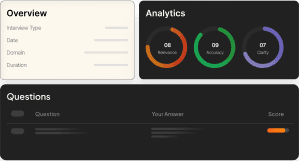
- AI-Driven Evaluation: Recruiters increasingly use AI tools to screen video interviews, assess tone, structure, and real-time answers.
These shifts mean preparation must be more targeted, adaptable, and precise. A candidate who understands these changes can use them to stand out. For example, preparing in a way that aligns with how AI interview systems score responses can greatly increase pass rates.
Mistakes Candidates Are Likely to Make
In periods of layoff-heavy news cycles, candidates often fall into predictable traps:
- Over-focusing on job posting volume, instead of identifying companies still hiring in growth areas.
- Underestimating AI screening systems, assuming human-interviewer strategies apply the same way.
- Neglecting technical refresh, arriving unprepared for unexpected coding or case-study components.
- Failing to adapt behavioral stories to current priorities, such as resilience, adaptability, and AI collaboration.
These mistakes can be mitigated by developing a preparation plan that combines human insight with tools that simulate — or respond to — the live conditions of modern interviews.
Actionable Strategies for Navigating the Market
First, job seekers need to assess their position relative to the market:
1. Identify Transferable Skills: Map your abilities to the new demands — especially AI interaction skills, automation literacy, and cross-functional collaboration.
2. Target Growth Segments: Even during layoffs, sectors like AI engineering, cybersecurity, and sustainability tech are expanding.
3. Upgrade Interview Readiness: Use methods that prepare for multi-format interviews — behavioral, technical, and live AI-based screenings.
One effective approach is incorporating real-time interview support into preparation workflows. This ensures you can respond effectively whether the interview is conducted by a person, an AI, or a mixed panel, and whether it involves coding exercises, case studies, or situational behavioral questions.
Responding to AI-Based Screening
A defining feature of the 2026 job market is AI-driven screening. Employers may use tools like Mercor AI to filter candidates before human review. This changes how answers are judged:
- Precision Matters: AI systems value structured, concise responses with clear reasoning.
- Soft Skills Still Count: Systems can detect tone and confidence; candidates need to convey professional composure.
- Technical Accuracy: Automated evaluations will flag incorrect or vague solutions in coding or problem-solving segments.
To adapt, candidates can practice with tools capable of instant feedback during mock assessments. For example, handling live technical questions using Verve AI Interview Copilot allows simulation of real screening flows, helping candidates polish both their approach and content.
Building Confidence Under Uncertainty
Layoffs create an environment of uncertainty that can undermine confidence. But confidence often correlates with preparation quality. Key tactics include:
- Simulating Stress Scenarios: Practice with time-limited tasks and unfamiliar problem formats.
- Expanding Behavioral Story Library: Prepare adaptable stories that demonstrate resilience, adapting to change, cross-discipline work.
- Continuous Improvement: After each interview, note what worked and refine.
You can also build resilience by staying composed during behavioral interviews with structured, real-time guidance tailored to your target role and company.
Conclusion
The layoffs at Amazon, eBay, Pinterest, and other major firms highlight a shift toward AI-led, efficiency-driven hiring. For job seekers, the implications are clear: competition is sharper, screening is more advanced, and skill expectations are broader.
Those who respond strategically — aligning skills with market demands, preparing for AI screening, and anticipating multi-format interviews — will navigate this turbulence more effectively. Tools like Verve AI Interview Copilot integrate adaptive, real-time preparation into the process, helping candidates perform confidently in any scenario.
The job market of 2026 rewards adaptability, preparedness, and agility. Layoffs disrupt, but they also create openings for those ready to meet the new standard.
FAQ
1. Are layoffs across Amazon, eBay, and Pinterest affecting hiring in all industries? Not all industries, but tech-adjacent sectors and roles vulnerable to automation are seeing slower hiring. Growth areas remain in AI development, data security, and specialized engineering.
2. How is AI affecting interview processes? AI is influencing both the screening phase and the interview itself — from automated resume parsing to real-time interview scoring.
3. What skills are most in-demand post-layoffs? Hybrid skill sets combining traditional domain expertise with AI or automation fluency, plus adaptability and cross-functional capabilities.
4. How can candidates prepare for AI-based interviews? By refining answers for structure, clarity, and precision; practicing under simulated AI screening conditions.
5. Are multi-round interviews becoming more common? Yes. Employers increasingly combine behavioral, technical, and AI evaluations into multi-stage processes to ensure candidates meet varied criteria.
Sarah Durham
Career Strategist


